

Frequently Asked Questions
We've been building faucets for nearly half a century. And in that time, we've solved plenty of riddles for homeowners and pros alike. We've gathered some of our most-asked questions to life a little easier for you.
General
How do I contact Peerless for assistance?
- Send a letter explaining your need to: Peerless Faucet Company, Attn: Product Service, 55 E. 111th St., Indianapolis, IN 46280
- Email the Customer Service team at CustomerService@peerlessfaucet.com.
- Click here to send a message directly to Customer Service.
- Call the Peerless Customer Service number 1-800-438-6673 and speak with a representative.
Where can I find my model number?
Your faucet's model number may be found on the packaging, and also on the Installation instructions provided with your faucet. If you threw those materials away, or don't know they are, you may be able to determine your model number using this website. Go to our Support Information Search section and describe your faucet to find its image and model number.
How do I determine if I have a Peerless faucet? Is the Peerless name on ALL faucets, including the older models?
Nearly every Peerless faucet will have the brand name on the faucet, usually on the escutcheon plate or spout base. Some of the older models may not say Peerless but may indicate MASCO on the aerator. If the internal parts have not been changed, the seats will have Peerless on them and two handle stems that are "D"-shaped. Years ago, the brand name also appeared on the drain stopper. However, it is not uncommon for someone to replace the lavatory faucet without replacing the drain assembly.
How do I e-mail Peerless?
Send us an email at CustomerService@peerlessfaucet.com. Or Click here to send a message directly to Customer Service.
What are the differences between Peerless Faucet models sold to trade customers and those sold to retail consumers?
The only difference is where they are sold. As for the product itself, there are no differences in the model. For example, "Model A" sold at a plumbing wholesaler is the same as "Model A" sold at a big box store. All Peerless product is of the same high quality, regardless of the distribution channel.
What is your 800 number?
Our toll-free Customer Service number is 1-800-438-6673. You can also contact us in the following ways:
- Send a letter explaining your need to: Peerless Faucet Company, Attn: Product Service, 55 E. 111th St., Indianapolis, IN 46280
- Email the Customer Service team at CustomerService@peerlessfaucet.com.
- Click here to send a message directly to Customer Service.
What is your mailing address?
Our mailing address is:
Peerless Faucet Company
Attn: Product Service
55 E. 111th St.
Indianapolis, IN 46280
You can also contact us in the following ways:
- Email the Customer Service team at CustomerService@peerlessfaucet.com.
- Click here to send a message directly to Customer Service.
- Call the Peerless Customer Service number 1-800-438-6673 and speak with a representative.
Cleaning and Care
Can drain openers cause damage to faucet finishes?
In most cases, the finish is safe if you follow the manufacturer’s instructions for use and make sure the drain cleaner isn’t left on the finish for longer than 30 minutes.
How can I remove mineral deposits from my aerator?
Remove the aerator. Soak it in vinegar overnight then flush it with water. For stubborn deposits, rub it with a toothbrush.
How can I clean and/or remove mineral deposits from my shower head?
We recommend soaking the item in a 50/50 mixture of white vinegar and water. This solution will help remove any deposits while not harming the finish or internal components. To make the task more efficient, you may want to check on the item periodically and use a tooth brush to help break up any remaining deposits.
How should I clean or maintain the finish on my faucet?
Always blot dry any water from the faucet surface. Allowing water to evaporate on the surface can lead to build up of mineral deposits. Cleaning with a damp non-abrasive sponge and buffing it dry with a clean soft cloth should help keep your product looking beautiful. To remove water spots, use warm water and a soft, damp cloth. Hard water stains may be removed using a 50/50 solution of white vinegar and water. Make certain that you rinse the surface thoroughly with water and blot dry afterward.
If additional cleaning is required, use well-diluted dish soap as you would with your glassware. Alternatively, all of our finishes may be cleaned with the following household cleaners: Formula 409® Antibacterial All Purpose Cleaner, Fantastik® All Purpose Cleaner, or Windex® Original Glass Cleaner, when used according to the manufacturers' instructions for use.
Avoid using the following, which can damage your finish:
- Avoid industrial cleaners and abrasive cleaners, such as those used for toilet bowls, green Scotch-Brite heavy duty scrub sponges, Scrubbing Bubbles Bathroom Cleaner and Lysol Basin Tub, Soft Scrub, and Tile Cleaner.
- Avoid products that state on the label that they remove tarnish and rust and those containing hydrofluoric, hydrochloric and/or phosphoric acids and caustic agents.
- Avoid harsh abrasives or polishes.
- Avoid bleach-based cleaners.
What cleaning products can cause damage to faucet and trim finishes?
Always blot dry any water from the faucet surface. Allowing water to evaporate on the surface can lead to build up of mineral deposits. Cleaning with a damp non-abrasive sponge and buffing it dry with a clean, soft cloth should help keep your product looking beautiful.
To remove water spots, use warm water and a soft, damp cloth. Hard water stains may be removed using a 50/50 solution of white vinegar and water. Make certain that you rinse the surface thoroughly with water and blot dry afterward.
If additional cleaning is required, use well-diluted dish soap as you would with your glassware. Alternatively, all of our finishes may be cleaned with the following household cleaners: Formula 409® Antibacterial All Purpose Cleaner, Fantastik® All Purpose Cleaner, or Windex® Original Glass Cleaner, when used according to the manufacturers' instructions for use.
Avoid using the following, which can damage your finish:
- Avoid industrial cleaners and abrasive cleaners, such as those used for toilet bowls, green Scotch-Brite heavy duty scrub sponges, Scrubbing Bubbles Bathroom Cleaner and Lysol Basin Tub, Soft Scrub, and Tile Cleaner.
- Avoid products that state on the label that they remove tarnish and rust and those containing hydrofluoric, hydrochloric and/or phosphoric acids and caustic agents.
- Avoid harsh abrasives or polishes.
- Avoid bleach-based cleaners.
Finish
Can I get a particular faucet in a different finish from what is available at the store?
Many stores can order Peerless® faucets that are not stocked or displayed on their shelves. Ask the plumbing department manager or store manager for assistance with Peerless special orders. You also can preview a large assortment of Peerless models in many finishes at www.peerlessfaucet.com.
How should I care for my non-PVD finish faucet?
Always blot dry any water from the faucet surface. Allowing water to evaporate on the surface can lead to build up of mineral deposits. Cleaning with a damp non-abrasive sponge and buffing it dry with a clean, soft cloth should help keep your product looking beautiful.
To remove water spots, use warm water and a soft, damp cloth. Hard water stains may be removed using a 50/50 solution of white vinegar and water. Make certain that you rinse the surface thoroughly with water and blot dry afterward.
If additional cleaning is required, use well-diluted dish soap as you would with your glassware. Alternatively, all of our finishes may be cleaned with the following household cleaners: Formula 409® Antibacterial All Purpose Cleaner, Fantastik® All Purpose Cleaner, or Windex® Original Glass Cleaner, when used according to the manufacturers' instructions for use.
Avoid using the following, which can damage your finish:
- Avoid industrial cleaners and abrasive cleaners, such as those used for toilet bowls, green Scotch-Brite heavy duty scrub sponges, Scrubbing Bubbles Bathroom Cleaner and Lysol Basin Tub, Soft Scrub, and Tile Cleaner.
- Avoid products that state on the label that they remove tarnish and rust and those containing hydrofluoric, hydrochloric and/or phosphoric acids and caustic agents.
- Avoid harsh abrasives or polishes.
- Avoid bleach-based cleaners.
What are the various finishes that are available for Peerless products?
The finishes available vary from product to product, so not all products are available in all finishes. The Product Catalog section of our website will allow you to select a product, see what finishes are available for that product, and view the product in each of those finishes. Other than chrome, each finish has a two-letter suffix in the faucet model number. A summary of finishes and their two-letter suffix is below:
Chrome (No suffix) - A highly reflective mirror finish with cool tones.
Matte Black (BL) - A black powder coated finish.
Brushed Nickel (BN) – A warm, muted silver finish with earthy undertones.
Oil Rubbed Bronze (OB) - A dark brown, muted finish with warm bronze highlights.
Stainless Steel (SS) - A brushed finish with a stainless-steel appearance.
White (WH) - A low gloss, pristine white finish.
White/Chrome (WC) - A high-gloss Chrome and pristine white split.
What is a PVD finish?
Physical Vapor Deposition (PVD) is a finishing process that takes place inside a vacuum chamber where pure metals are combined with reactive gases to create hard, durable metallic colors. Within this chamber, plasma vapor consisting of reactive gases such as Argon, Nitrogen, Oxygen, Acetylene, and Methane combine with certain metals and are deposited on the parts being coated to create the desired color.
PVD finishes have a high degree of hardness and are highly resistant to abrasion and to chemical attack. PVD is superior to other plated finishes and offers the most durable and vibrant finishes available. It is smoother, brighter and harder, and is a 100% environmentally friendly process. No pollutants or harmful gases are created during the PVD process. PVD eliminates most problems associated with plated and organically coated finishes that can tarnish if the clear coating covering them is scratched.
With PVD, the desired decorative finish is even more durable than polished chrome.
In addition to being durable and beautiful, PVD finishes are discoloration resistant, and easy-to-clean, important features customers expect from kitchen and bath fixtures.
If your faucet has a Brushed Nickel or Stainless finish, you have a PVD finish.
What makes PVD finishes so great?
Good looks that last. PVD finishes can freshen the look of your kitchen or bath, but (unlike traditional clear coatings) they're designed to look new forever. They won't corrode, tarnish or discolor. Peerless' PVD finishes were tested against more than 100 common household cleaners. They'll even withstand prolonged exposure to hard water or sea air.
Why do I have pin holes in my Peerless faucet spout?
Pin holes in a Peerless faucet spout are usually caused by "dezincification," which is the removal of zinc from the brass due to salt solutions, brackish water, mildly acidic solutions and poorly grounded plumbing systems. When the zinc is removed, the copper is redeposited to these areas and the surface of the part. The redeposited copper is a weak mass that is porous and fragile.
If this has happened, you will need to replace the spout. To determine the spout part number for your faucet model, contact your Peerless plumber, or email us.
Why is my Polished Brass tarnishing or peeling?
Traditional Polished Brass finishes were coated with a clear coating to inhibit tarnish. Over time, this clear coat can be broken or scratched with regular wear and tear, abuse or harsh cleaning chemicals, causing the finish to tarnish or the coating to peel. Unfortunately, it's not possible to repair the clear coat so you will need to replace any parts of your faucet that are tarnished or badly scratched.
Why is the finish deteriorating on my faucet's spout, handles and aerator?
Normally, finish deterioration is due to years of wear and tear, abuse or chemical attack. When it is happening to several components or different products in the bathroom, for example, it is likely due to the cleaner being used. The finish cannot be repaired once damaged; however, you can replace many of common faucet parts where the finish deterioration is most noticeable.
To determine the parts you need, contact your Peerless plumber. You can also email us for assistance or call 1-800-438-6673.
Why is the chrome finish peeling off my faucet?
It could be damage caused by a caustic or harmful cleaner. Although your faucet's non-PVD finish is extremely durable, it can be harmed by harsh abrasives. For this reason, we suggest you use only nonabrasive cleaners.
Always blot dry any water from the faucet surface. Allowing water to evaporate on the surface can lead to build up of mineral deposits. Cleaning with a damp non-abrasive sponge and buffing it dry with a clean, soft cloth should help keep your product looking beautiful.
To remove water spots, use warm water and a soft, damp cloth. Hard water stains may be removed using a 50/50 solution of white vinegar and water. Make certain that you rinse the surface thoroughly with water and blot dry afterward.
If additional cleaning is required, use well-diluted dish soap as you would with your glassware. Alternatively, all our finishes may be cleaned with the following household cleaners: Formula 409® Antibacterial All Purpose Cleaner, Fantastik® All Purpose Cleaner, or Windex® Original Glass Cleaner, when used according to the manufacturers' instructions for use.
Avoid using the following, which can damage your finish:
- Avoid industrial cleaners and abrasive cleaners, such as those used for toilet bowls, green Scotch-Brite heavy duty scrub sponges, Scrubbing Bubbles Bathroom Cleaner and Lysol Basin Tub, Soft Scrub, and Tile Cleaner.
- Avoid products that state on the label that they remove tarnish and rust and those containing hydrofluoric, hydrochloric and/or phosphoric acids and caustic agents.
- Avoid harsh abrasives or polishes.
- Avoid bleach-based cleaners.
Handles
Can I change my single-handle knob faucet to a lever?
Single-handle lavatory and tub/shower models can be converted from a clear or smoked knob handle to a lever handle. However, the "action" of a lever handle differs from a knob handle, so you will also need a different ball valve (RP20111) in your faucet for the lever handle to operate properly. A single-handle faucet converted from knob handle to lever handle will operate slightly differently from an "original equipped" lever model.
Can I change the handles on my two-handle faucet?
Yes. Peerless® two-handle kitchen, lavatory and tub/shower models can be fitted with a wide variety of handle styles to suit your tastes. Changing Peerless faucet handles is simple and takes less than five minutes, a 3/32" hex wrench or Phillips screwdriver.
If you are changing from lever handles to knob or porcelain cross handles, you will need to re-orient the right (cold) handle stem stop, so that the stem stop faces inward.
If you are changing from knob or porcelain cross handles to lever handles, you will need to re-orient the right (cold) handle stem stop, so that the stem stop faces outward. Both left and right handle stem stops should orient to the right.
Can I use Brizo handles on my Peerless faucet?
No, the Brizo faucet handles will fit the same stem assembly, but they’re not compatible with the rest of the Peerless trim.
Why do my handles work backward on my two-handle faucet?
If the handles on your two-handle kitchen or lavatory faucet rotate in the wrong direction, simply rotate the right stem stop assembly 180 degrees. This will change the rotation of the handle to the other direction and will reduce comments about how weird your faucet is. Knob handles are designed to rotate counterclockwise by having the stem stops (1) toward the center.
Lever handles are designed to rotate from outside toward sink by having the stem stops (2) on the right side. The quarter-turn stops (3) prevent the handles from swinging into the spout.
Installation
Although a wrench cannot be used on the caps or bonnet nuts, can a strap wrench be used?
Yes, you just need to be cautious not to scratch or bend the part.
Do you have any special instructions for installing pressure balance valves back-to-back?
Back-to-back installations require that the pressure balancing cartridge be "flipped" or rotated 180 degrees in order for both units to function properly. Flipping the cartridge will reverse the hot and cold-water supply lines so that the faucet works like a traditional hot/cold unit. The cartridge may also be flipped to correct a hot/cold reversal resulting from connecting the supply lines to the incorrect sides of the valve.
Here are the steps to follow in reversing the operation of your faucet:
- Before you begin, make sure that you shut off the water supply to the faucet.
- Remove the handle. A clear knob will have a Phillips head screw located just under the plastic cap; a lever handle usually has a small set screw located on the side.
- Slide off the finished metal sleeve that covers the valve.
- Unscrew the bonnet nut. The bonnet nut is a large brass ring and should unscrew by hand. If it is too tight, use a strap wrench, or wrap a towel around the bonnet and use a pair of channel locks. Make sure that the entire valve body does not start to rotate as you do this. Remove the bonnet nut.
- Do not pry the valve cartridge out of the body with a screwdriver. Place the handle on the cartridge stem and rotate it counterclockwise approximately 1/4 turn after the stop has been contacted. Remove the handle. Grasp the brass stem in the center of the white plastic assembly and pull it directly out, away from the wall. The valve cartridge should slide out of the brass valve body.
- Reinstall the cartridge after rotating the entire unit 180 degrees. Make sure that the raised plastic stop, marked "HOT", is on the right side of the valve.
- Reattach the bonnet nut, trim sleeve, and handle.
How can I make sure my shower is safe?
Here are some safety tips for you to observe with your shower:
- To avoid dangerously hot temperatures, make sure your water heater is set at 120° F or below.
- Install a pressure balance tub and shower valve.
- Set the valve's adjustable rotational limit stop to prevent the temperature handle from being turned to dangerously hot levels.
- Test the tub/shower water with your hand before bathing.
How do I set the adjustable rotational limit stop on my bath or shower?
Follow these steps:
- Let the water run until both hot and cold water is fully mixed.
- Rotate the handle fully counterclockwise, to the hottest position.
- Place a thermometer in a plastic tumbler and hold the tumbler in the water stream.
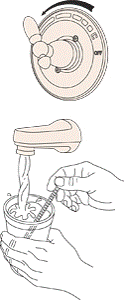
- If the water temperature is above what your local plumbing code allows (110° F or 120° F), remove the handle (to remove the handle, depending on the handle design, you may need a 1/8" or 3/32" hex key, or a Phillips screwdriver) or take off the temperature knob and rotate the rotational limit stop as follows:
- Turn the limit stop counterclockwise. For every tooth the rotational limit stop is rotated counterclockwise, the maximum water temperature will decrease approximately 6°F. NOTE: If your water temperature is too cool, rotate the limit stop clockwise.
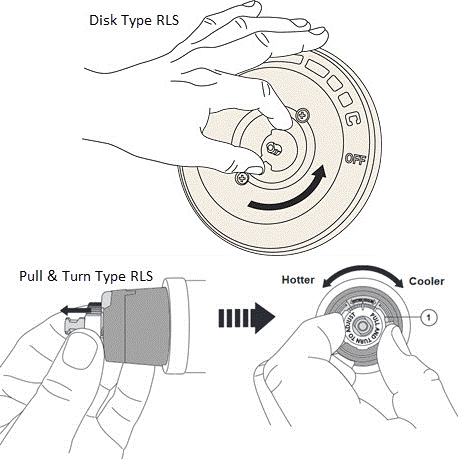
- Turn the limit stop counterclockwise. For every tooth the rotational limit stop is rotated counterclockwise, the maximum water temperature will decrease approximately 6°F. NOTE: If your water temperature is too cool, rotate the limit stop clockwise.
- Replace the handle. After verifying the water outlet temperature, secure the handle with the screw. Do not over tighten.
- MAKE SURE COLD WATER FLOWS FROM THE VALVE FIRST. ALSO MAKE SURE THAT YOUR WATER (AT THE HOTTEST FLOW) DOES NOT EXCEED THE TEMPERATURE ALLOWED (see steps 1-4 above).
Note: Consumer safety is our number one concern. If you do not have experience with plumbing repairs, we recommend that you contact a licensed plumber for tub/shower repairs.
My single handle kitchen faucet keeps loosening up on our sink. Why?
Most likely your sink has a very smooth underside and with use, the mounting bracket is loosening up over time. We recommend placing some emery cloth between the sink and the mounting bracket of the faucet to help give it some traction when tightened down.
The water in the shower is either hot or cold; I cannot get any temperature in-between. What's wrong?
The spool and sleeve, the part of the pressure balance valve that blends the hot and cold-water, may not be working properly. This can be caused by mineral deposits that build up over time, resulting from hard water. To solve, follow the steps below.
Tools you may need before starting: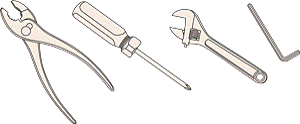
- Shut off the water supply.
- Remove the handle.
- Twist and pull sleeve to remove it.
- Unscrew brass bonnet nut.
- Remove the cartridge.
- Tap the cartridge side in your palm. The spool inside should rattle when you shake the cartridge.
- Soak cartridge in a 50/50 vinegar and water solution for 8-12 hours to remove mineral deposits that may be clogging the cartridge.
NOTE: Unless both the hot and cold water supplies are turned on, the pressure balance valve will allow only a dribble of water to flow through the valve.
What are the proper flushing procedures for a new faucet?
During the first few days you use your faucet, a small amount of debris may be flushed out of your pipe system. This happens even though the plumber flushes the pipes before completing work on your home. In addition, particles of solder, copper chips, plumber's tape and other installation materials can get caught in aerators and showerheads. Occasionally, a chip might damage the valve seat that provides the watertight seal. The tips below will help you avoid problems. It's a good idea to follow these procedures each time the water has been turned off for repairs in your home.
TO FLUSH A KITCHEN OR LAVATORY FAUCET:
- Remove aerator and black sealing gasket above it.
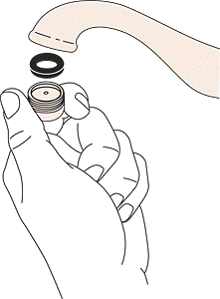
- Turn faucet handle(s) to full on hot and cold mixed position(s) and flush lines for two minutes before turning off water with handle(s).
- Replace aerator.
TO FLUSH A TUB / SHOWER FAUCET:
- Remove showerhead if applicable
- Turn handle(s) to full on hot and cold mixed position(s).
- Flush spout two minutes without moving handle(s).
- If you have a showerhead, divert water to it and flush for two minutes. BE SAFE! Make sure cold water flows FIRST and that the rotational handle limit stop is properly set. See information on setting the adjustable limit stop.
- Replace showerhead.
If problems persist, flush the faucet and lines using these instructions:
- Turn off water supply to both hot and cold.
- Remove all internal components.
- Turn water supplies back on and let run for 30-60 seconds. (For kitchen and lavatory faucets turn a bucket or similar large container upside down over faucet to deflect the water into the sink.)
- Turn water supplies off again.
- Reassemble faucet.
- Turn water supplies back on.
Does my shower valve protect me from sudden hot or cold-water changes?
Yes. The Peerless shower valves feature a stainless-steel pressure balancing spool, which is a safety part inside that keeps the water temperature steady, reducing the risk of a scalding or chilly blast from the shower. This safety feature protects the user by equalizing the water pressure inside of the shower valve itself if there is a decrease in pressure from the hot or cold-water supply. If a pressure change were to occur the faucet will automatically readjust the water pressure from the opposite side so that it is equal with the supply that dropped in pressure. Meaning that if someone is in the shower and the toilet is flushed, the valve will reduce the hot water pressure coming into the faucet to match the cold. This ensures a constant temperature within + or - 3 degrees Fahrenheit.
If you always have large differences between hot and cold-water pressures, the faucet will only allow water through at the lower pressure. If you have a hot water supply of 25 PSI (pounds per square inch) and the cold-water supply of 60 PSI, the faucet will always operate at 25 PSI.
What is the adjustable rotational limit stop?
The adjustable rotational limit stop found on Peerless® valves allows you to set a maximum hot water temperature for water flowing out of the tub/shower. When set correctly, this safety feature will ensure that the handle in your tub/shower faucet never rotates beyond the set level—resulting in a safe bathing temperature.
It may need to be readjusted if the inlet water temperatures change. For example, during the winter, the cold-water temperature is colder than it is during the summer, which could result in varying outlet temperatures. Typical temperatures for a comfortable bath or shower range from 90° F to 110° F.
What tools should I have before I begin installing my faucet?
Some common tools include:
- Basin wrench
- Adjustable wrench
- Silicone sealant - Plumber's Putty is not generally recommended
- Plumber's Tape
- Channel locks
- Screwdriver (Phillips and slotted)
- Flashlight
Please refer to the Maintenance & Installation Sheet supplied with the faucet to make sure you have all the necessary tools. If you need a Maintenance & Installation Sheet for your faucet, visit the Online Catalog and search for your faucet. When your faucet appears, select the Maintenance & Installation option to view the installation information.
Who can I call if I need help while I'm installing my faucet?
You can call us here at 1-800-438-6673 Monday - Friday: 8 a.m. - 7 p.m. EST and Saturday: 9 a.m. - 6 p.m. EST or Click here to send a message directly to Customer Service.
Why does the Peerless® name face the back of the faucet?
The faucet is in the wrong position.
To correct an uninstalled faucet:
- Rotate the spout 180 degrees so the Peerless® name appears below the spout.
To correct an installed faucet:
- Shut the water off at the water supplies.
- Disconnect the faucet and remove it from the sink.
- Rotate the spout 180 degrees so the Peerless name appears below the spout, and it faces toward the sink.
- Reinstall the faucet.
Why does water come out of my shower head and the spout at the same time?
Most likely you are experiencing "shower-rise," where the water can't get out of the spout as fast as it flows through the valve. This causes the water to back up and come out the shower head. There can be one of several reasons for this:
- The valve could be upside down.
- The length from the valve to the tub spout is outside of the 8" to 18" rule.
- There is more than one 90-degree angle.
- Something other than copper or galvanized pipe going to the spout was used.
- The most common reason is that there is something restricting the water flow to the spout (for example, solder or something lodged in the pipe). Something is impeding the flow of water to the spout and causing it to back up and go out of the shower head. If this is the cause of shower-rise, it is possible to remove the blockage by removing the tub spout, and then feeding a plumber's snake or a speedometer cable up through the tub drop. The act of feeding it causes it to twirl and loosen the blockage. Be sure to flush the valve before reinstalling the tub spout. Be sure to check the tub spout itself for blockage.
If none of these help, you may need to call a plumber. After the shower has been installed and the wall has been closed, there is little that can be done to remedy this situation yourself.
Leaks
After turning off my pull-out spray faucet, water continues to drip for a minute or so. Is something wrong?
Nothing is wrong with your faucet. Water is simply emptying from the aerator and the hose of your faucet. The top of the arch of your spout is above the aerator, so water runs down the arch and out. The hose also expands slightly when the water is running. When the water is shut off, the hose contracts to its original size squeezing out the water.
If your drip continues for more than a minute or so, then you may have debris in your valve or need to replace the cartridge or seats inside the valve.
What do I do if my two-handle faucet leaks under the handle?
Here are some tools you may need: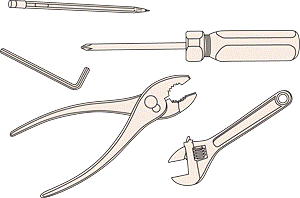
On a two-handle faucet, try tightening the bonnet shown below.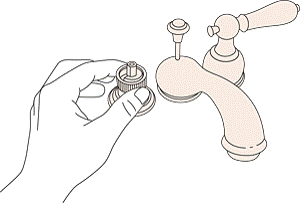
If that does not work, you may need to replace the stem.
To identify the appropriate handle stem, search for the model number on peerless.com and refer to the parts diagram provided on the product page.
To replace the stem:
- Shut off the water supply.
- Cover drain opening so parts won’t fall into it.
- If you have lever handles, loosen the set screw with an Allen wrench. 3/32" is the most common size. And then remove the handle.
If you have knob handles, carefully pry off the handle button. Then remove the screw using a Phillips screwdriver and lift off the handle. - Unscrew bonnet nut. Use an adjustable wrench to loosen if necessary.
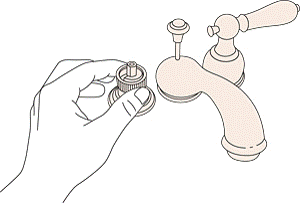
- Note the orientation of the stem unit. Pull stem straight up and out.
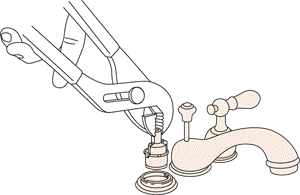
- IMPORTANT—STEM MUST BE REPLACED PROPERLY.
- Knob handle stem position: Slip the stem unit into the body, aligning the tabs on the stem with the slots in the body, so the “stop” on each stem points toward the spout.
- Lever handle stem position: Align the tabs on the stem with the slots in the body, so the “stop” on each stem points toward the right. If you have lever handles, you may also need to reinstall the quarter turn stops to limit the handles from turning more than 90º. Note: If you reinstall the handles and find that they aren’t turning in the correct direction, rotate the stem 180º and check for proper handle rotation.
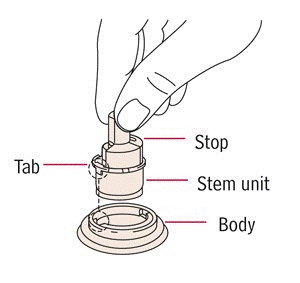
- Screw bonnet nut on and hand tighten.
- Replace handle, tighten the screw.
My faucet leaks. Should I take it back to the dealer?
In most cases, a faucet leak can be repaired with Peerless® Genuine Parts. If you still have your installation instructions for the faucet, check the troubleshooting section for repair information.
If you don’t have your installation instructions anymore, please visit the Online Catalog to search for your faucet’s maintenance & installation instructions. Once you find your faucet, select Maintenance & Installation for repair information.
If these options don't work, call 1-800-438-6673 or e-mail us for assistance.
My pressure balance valve isn't working properly. What can I do?
Tips for maintaining a pressure balance valve.
The spool and sleeve, the part of the Monitor pressure balance valve that blends the hot and cold water, may not be working properly. This is often caused by mineral deposits that build up over time. To solve, follow the steps below.
Tools you may need: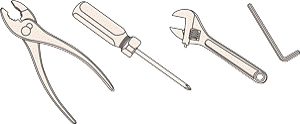
- Shut off the water supply.
- Remove handle.
- Twist and pull sleeve to remove it.
- Unscrew the brass bonnet nut.
- Remove cartridge.
- Soak the cartridge in a 50/50 vinegar and water solution for 24 hours to remove any mineral deposits.
NOTE: Unless both hot and cold water supplies are turned on, the pressure balance valve will allow only a dribble of water to flow through the valve.
Helpful Hints:
- Before removing valve cartridge assembly for any maintenance, be sure to note the position of the stop on the cap. The valve cartridge assembly must always be put back in the same position. For normal installations, the stop on the cap will face the left.
BE SAFE! After you have finished the installation, turn on valve to make sure COLD WATER FLOWS FIRST.
- To remove valve cartridge from body, shut off water supplies and remove handle and bonnet nut. Do not pry the valve cartridge out of the body with a screwdriver. Place handle on stem and rotate counterclockwise approximately 1/4 turn after the stop has been contacted. Lift valve cartridge out of body
- To remove seats and springs, remove valve cartridge. Separate cap assembly from the housing assembly by rotating the cap assembly counterclockwise 90 degrees. Separate cap and housing assemblies. Remove seats and springs and replace. Place the largest diameter of the spring into the seat pocket first and then press the tapered end of the seal over the spring. Reassemble valve cartridge and replace in body following instructions given in 1 above.
- If the water in your area has lime, rust, sand or other contaminants in it, your pressure balance valve will require periodic inspection. The frequency of the inspection will depend on the amount of contaminants in the water. To inspect valve cartridge remove it and follow the steps in note 1 above. Turn the valve to the full mix position and shake the cartridge vigorously. If there is a rattling sound, the unit is functional and can be reinstalled following instructions given in note 1 above. If there is no rattle, replace the cartridge.
What do I do about water dripping from the spout of my two-handle kitchen or lavatory faucet?
One of the more common faucet valve systems uses a stem unit assembly with seats & springs. With normal wear, the faucet’s seats and springs become worn, which may result in a leak from the spout. To stop the leak, simply replace the seats and springs by following these steps. If there is a single component cartridge and no seat & spring in the valve body, just replace the cartridge.
Here are some tools you may need:
If you are not certain, you will need to find out if the hot or cold valve is causing the leak. Let's begin by troubleshooting with the hot valve:
- Shut off the water supply.
- Cover the drain opening so parts won’t fall into it.
- If you have lever handles, loosen the set screw with a hex wrench and remove the handle. If you have knob handles, pry off the handle button, remove the screw, and lift off the handle.
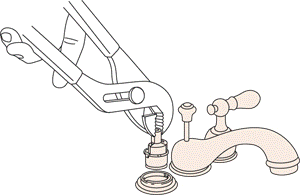
- Unscrew the bonnet nut. Use an adjustable wrench to loosen if necessary.
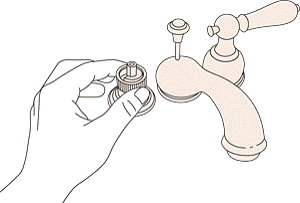
- Take note of the stems and the raised portions around it so you can put them back in the same arrangement. Pull the stem straight up and out.
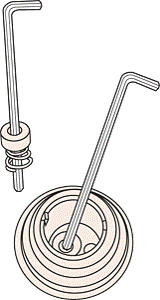
- Remove the seat and spring. You can lift them out with a thin screwdriver or a hex wrench. If you do not see a donut shaped seat and metal spring in the valve body, then only the stem cartridge needs replaced.
- Wipe the inside of the body, including where the seat and spring sit, with a soft, lint-free cloth.
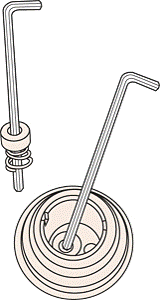
- Place the new seat over the new spring and insert them into the socket in the body using a thin tool or a hex wrench. (Small end of the spring goes into the seat; the large end of the spring goes into the faucet body.)
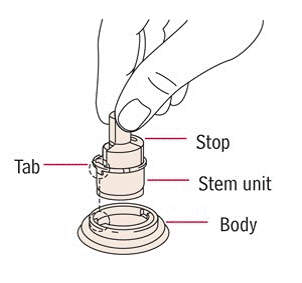
- IMPORTANT—STEM MUST BE REPLACED PROPERLY.
- Knob handle stem position: Slip the stem unit into the body, aligning the tabs on the stem with the slots in the body, so the “stop” on each stem points toward the spout.
- Lever handle stem position: Align the tabs on the stem with the slots in the body, so the “stop” on each stem points toward the right. If you have lever handles, you may also need to reinstall the quarter turn stops to limit the handles from turning more than 90º. Note: If you reinstall the handles and find that they aren’t turning the right direction, rotate the stem 180º and check for proper handle rotation.
- Screw the bonnet nut back on, tightening it by hand.
- Replace the handle and tighten its screw.
Repeat the above steps on the cold valve. If the problem continues after you replace the seats and springs, replace both stem assemblies.
What do I do about water dripping from the spout of my two-handle (or three-handle) tub/shower faucet?
First, we need to find out whether it’s the hot or cold valve causing the constant leak. Let's begin by troubleshooting with the hot valve:
- Shut off the hot water supply. If you can't find the shut-off for your tub/shower valve, shut off the water to your house by using your water shut-off valve.
- Remove the faucet handle. Depending on your handle type, you will need a Phillips screwdriver or an Allen wrench to do this.
- Remove the chrome bonnet nut using an adjustable wrench.
- Remove the stem extender by unscrewing the retention screw with a Phillips screwdriver.
- Remove the stem assembly by pulling straight out.
- Remove the seats and springs inside the valve body.
- Examine them for wear or debris and wipe out any debris in the depression where the seats and springs sit in the valve body.
- Replace the seats and springs.
- Reassemble the faucet and confirm drip has stopped.
If the drip persists, repeat the above steps on the cold valve.
If you've replaced the seats and springs and the problem continues, replace both stem assemblies.
If all of the above has not fixed your leak, and your valve is more than about 25 years old, it is possible that the actual faucet body may have developed a leak. If so, you will need to replace your tub/shower valve with a new one.
Note: Consumer safety is our number one concern. If you do not have experience with plumbing repairs, we recommend that you contact a licensed plumber for tub/shower repairs.
What do I do about water flowing from my diverter tub spout while it is in the shower mode?
It is normal for a small (pencil thin) stream of water to continue to flow from the tub spout when the shower is in operation.
If the amount of water flow is excessive, then this indicates a problem with the diverter located in the tub spout. This cannot be repaired, and the spout must be replaced. Remove the tub spout and replace it with a Genuine Peerless tub spout.
To locate a local source for Peerless tub spouts, contact a licensed professional plumbing contractor, or call 1-800-438-6673, or just e-mail us for assistance.
Note: Consumer safety is our number one concern. If you do not have experience with plumbing repairs, we recommend that you contact a licensed plumber for tub/shower repairs.
What do I do if my single handle faucet leaks under the handle?
On a single handle faucet, you need to tighten the adjusting ring or replace the cam and packing.
- Tighten the adjusting ring until no water leaks around the stem when the faucet is in the full-on hot and cold mixed position, and pressure is exerted down on the handle.
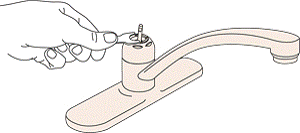
- Loosening and tightening the adjusting ring also controls how hard or easy the handle is to use. Over-tightening the adjusting ring can cause premature wear of the seal surfaces, making frequent repairs necessary.
If there’s still a leak after you’ve tightened the adjusting ring, you may need to replace the cam and packing using Peerless Genuine Parts. And here’s how you do that:
- Shut off the water supply.
- Cover the drain opening with a towel so parts can’t fall down the drain.
- If you have a lever handle with a red and blue hot/cold button, pry it off to expose the set screw. Loosen the set screw with an Allen wrench and remove the handle. If you have a knob handle, pry off the handle button, remove the screw and lift off the handle.
- Unscrew the cap (counterclockwise) and lift it off. If the cap is too difficult to unscrew by hand, loosen the gray or white adjusting ring in the cap and try again. If you still can’t remove it by hand, place a crescent wrench at the top of it and turn counterclockwise. To avoid damaging the faucet finish, you may want to place a jar opener gripper between the cap and wrench, or a heavy cloth (such as a towel) between the cap and wrench. CAUTION: IF YOU NOTICE THE CAM TURNING ALSO, QUIT TURNING IMMEDIATELY AND CALL A PLUMBER.
- Remove the cam, packing and ball by lifting up on the ball stem.
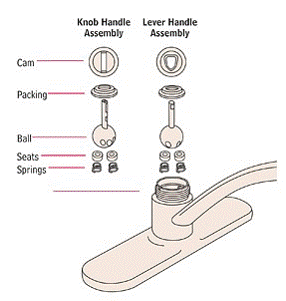
- Place the replacement packing and cam over the stem of the ball and engage the tab on the cam with the slot in the body. (The peak of the triangle in the cam for a lever handle faucet will be facing the spout.) Now push down.
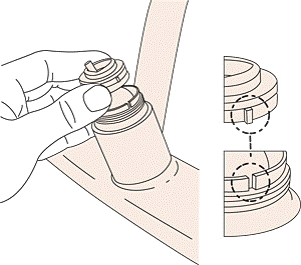
- Partially unscrew the adjusting ring, then place the cap over the ball stem and hand-tighten it onto the body, while pushing down on the cam to keep its tab engaged with the slot in the body.
- Tighten the adjusting ring until no water leaks around the stem when the faucet is in the full-on hot and cold mixed position, and pressure is exerted down on the handle.
What do I do if my single lever tub or shower leaks under the handle?
On a single-handle tub or shower, you need to tighten the adjusting ring or replace the cam and packing.
- Tighten the adjusting ring until no water leaks around the stem when the faucet is in the full-on hot and cold mixed position and pressure is exerted down on the handle.
- Loosening and tightening the adjusting ring also controls how hard or easy the handle is to use. Over tightening the adjusting ring can cause premature wear of the seal surfaces, necessitating frequent repairs.
If the leak persists, you may need to replace the cam and packing using Peerless Genuine Parts.
- Shut off water supply.
- Cover drain opening so parts don't fall into it.
- If you have a lever handle with a red and blue hot/cold button, pry it off to expose the set screw. Loosen the set screw with an Allen wrench and remove the handle. If you have a knob handle, pry off the handle button, remove the screw and lift off the handle.
- Unscrew the cap counterclockwise and lift off. If the cap is too difficult to unscrew by hand, loosen the gray or white adjusting ring in the cap and try again. If it is still too difficult to remove by hand, place a crescent wrench at the top of it and turn counterclockwise. To avoid damaging the faucet finish, you may want to place a jar opener gripper between the cap and wrench or a heavy cloth such as a towel between the cap and wrench.
CAUTION: IF YOU NOTICE THE CAM TURNING ALSO, QUIT TURNING IMMEDIATELY AND CALL A PLUMBER. - Remove cam, packing and ball by lifting up on ball stem.
- Place replacement packing and cam over stem of ball and engage tab on cam with slot in body. Push down.
- Partially unscrew adjusting ring and then place cap over ball stem and hand tighten onto body, while pushing down on cam to keep cam's tab engaged with slot in body.
- Tighten the adjusting ring until no water leaks around the stem when the faucet is in the full-on hot and cold mixed position and pressure is exerted down on the handle.
- Loosening and tightening the adjusting ring also controls how hard or easy the handle is to use. Over tightening the adjusting ring can cause premature wear of the seal surfaces necessitating frequent repairs.
What do I do if my single-handle kitchen faucet drips from the spout outlet or aerator?
Through normal use, and depending on the water conditions in your area, the seats and springs experience wear and may need to be replaced occasionally. It is also possible that there is sediment or debris in your faucet. If your faucet drips from the spout, follow these simple steps:
First attempt to flush the debris from the system:
- Remove the aerator.
- Turn off the water supplies.
- Turn the faucet handle to the "on" position.
- Turn the water on at the supply.
- Flush the faucet and supply lines for one minute.
- Wash any debris from the aerator before you replace it.
- Turn off the water using the faucet handle.
Next, check the seats and springs and the ball valve. You may need to replace those using Peerless Genuine Parts.
- Shut off water supply.
- Cover the drain opening so parts don't fall into it.
- If you have a lever handle with a red and blue hot/cold button, pry it off to expose the set screw. Loosen the set screw with a hex key (usually 1/8") and remove the handle. If you have a knob handle, pry off the handle button, remove the screw with a Phillips screwdriver, and lift off the handle.
- Unscrew the cap counterclockwise and lift off. If the cap is too difficult to unscrew by hand, loosen the gray or white adjusting ring in the cap and try again. If it is still too difficult to remove by hand, place an adjustable wrench at the top and turn it counterclockwise. To avoid damaging the faucet finish, you may want to place a jar opener gripper between the cap and wrench or a heavy cloth such as a towel between the cap and wrench. CAUTION: IF YOU NOTICE THE CAM TURNING ALSO, QUIT TURNING IMMEDIATELY AND CALL A PLUMBER.
- Remove cam, packing and ball by lifting up on ball stem.
- Remove seats and springs. You can lift them out with a pencil or an Allen wrench.
- Wipe the inside of the body with a soft cloth, including where the seats and springs sit.
- Place new seats over new springs and insert them into sockets in the body using a pencil or an Allen wrench. (Small end of the spring goes into the seat and the large end of the spring goes into the faucet body.)
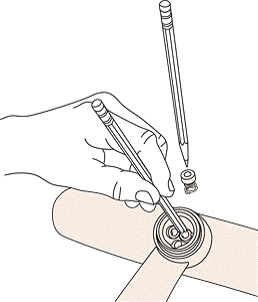
- If a stainless steel ball is already installed, check it for damage or mineral deposits. Clean it by soaking it in vinegar and wiping it with a rough towel. If the ball appears to be scratched or damaged, you may also need to replace the ball. Place ball into body.
- Place packing and cam over the stem of the ball and engage the tab on the cam with the slot in the body. (The peak of the triangle in the cam for a lever handle faucet will be facing the spout.) Push down.
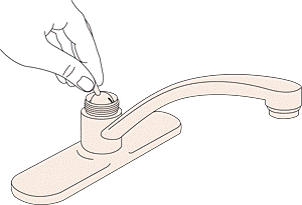
- Partially unscrew the adjusting ring and then place the cap over the ball stem and hand tighten onto the body, while pushing down on the cam to keep the cam's tab engaged with the slot in the body. (Note: If the cam and packing is the single piece self-adjusting design and the faucet has the adjusting ring installed at the top of the bonnet nut/cap it should be removed prior to reinstalling the bonnet nut/cap and discarded. Leaving it installed can damage the cam and cause the faucet to leak from the handle.
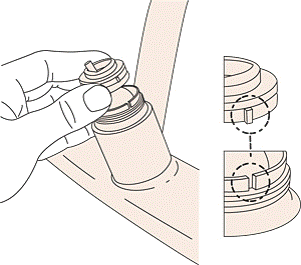
- Tighten the adjusting ring until no water leaks around the stem when the faucet is in the full on hot and cold mixed position and pressure is exerted down on the handle.
Loosening and tightening the adjusting ring also controls how hard or easy the handle is to use. Over-tightening of the adjusting ring can cause premature wear of the seal surfaces necessitating frequent repairs.
If the leak persists, check the faucet's stainless steel liners. Replace the entire faucet if the liners are missing, damaged or sticking up above the brass valve body.
What do I do if water leaks from my kitchen spout while my vegetable spray is in use?
The problem may be a blocked or damaged diverter assembly. Follow these steps to solve:
To access the diverter -- Single-handle faucet:
- Shut off water supply under the sink.
- Cover drain opening so parts won’t fall into it.
- Remove the handle, cap, cam, packing and ball assembly.
- Gently rotate and lift off the spout.
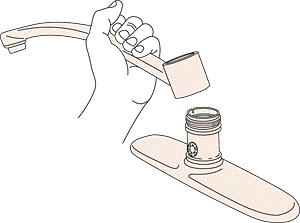
- Remove the diverter assembly. Be sure to remove the entire diverter.
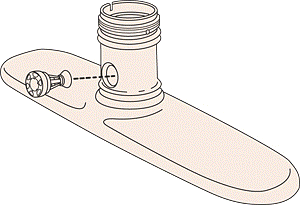
- Insert a flat head screwdriver or an Allen wrench into the body cavity to pop out the diverter. Check for debris on the diverter, as well as in the diverter cavity in the faucet body. A flashlight will help when looking to the back of the cavity.
- Clean the diverter thoroughly by soaking in a 50/50 vinegar and water solution for two hours; reinstall. If diverter appears damaged, replace it with Peerless® Genuine Part.
To access the diverter -- Two-handle faucet:
- Shut off water supply under the sink.
- Cover drain opening so parts won’t fall into it.
- Unscrew and remove the spout nut. Use a crescent wrench to loosen if necessary.
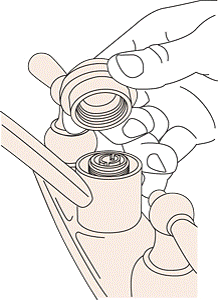
- Unscrew the diverter from the top of the body using a coin (if the diverter is plastic) or a screwdriver (if the diverter is metal). Be sure to remove the entire diverter.
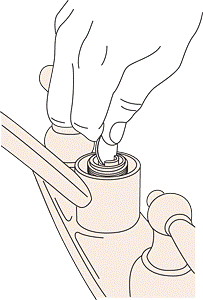
- Clean the diverter by soaking in a 50/50 vinegar and water solution for 2 hours. Flush any debris from the opening.
- Replace the diverter and spout nut.
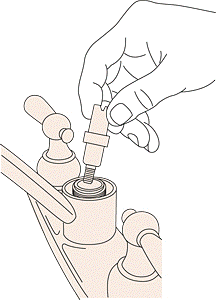
Check to see if the diverter functions properly. If not, replace it with a Peerless diverter. Be sure that the old diverter seal is removed before install the new diverter. The old diverter seal can prevent the new diverter from operating properly.
Be careful not to over tighten the diverter.
NOTE: Old style metal and current-style plastic diverters are interchangeable.
What should I do if water is leaking behind the wall of my tub/shower valve?
Shut off the water supplies to your tub/shower valve. If you can’t find those, shut off all the water to your house using your main shut-off valve. Then call a licensed professional plumbing contractor for assistance.
Why doesn't my pop-up sink stopper stop the water from draining?
Look under the sink to be sure the strap assembly that operates the stopper is properly adjusted and that the nut holding the horizontal rod in the drain assembly is secure. Be sure the stopper is properly adjusted.
Note: The cap on the stopper is not designed to be flush with the flange. A seal is created by the weight of the water, which pushes the rubber seal under the stopper against the flange in the sink.
If your drain stopper has been installed to be non-removable, check to see if any section of the pivot rod or strap assembly hits underneath the counter or sink. If so, the stopper can't drop far enough to create a seal in the sink. Depending on what is blocking the action of the pivot rod or strap, you may be able to rotate the pop-up sink stopper slightly so it no longer bumps against anything under the sink.
If everything is adjusted properly, check the amount of silicone or putty between the flange and the sink itself. Although a white gasket is supplied with most drains to seal under the flange, if a sink has an unusually rough drain area surface, it may be necessary to use silicone instead of the gasket. It is possible to determine if there is insufficient silicone or putty under the flange by using a rubber stopper to seal the drain opening only. You can also press down on the stopper to attempt a manual seal and determine if water is leaking around the pop-up flange. If there is insufficient silicone or putty between the sink and the pop-up flange, water will leak out of the sink into the drain, even with the drain stopper fully closed.
Note: Water will not leak onto the cabinet floor; it will seep into the drain via the overflow holes in the drain body.
To check the flange's seal:
Remove the nut that holds the horizontal rod to the body of the drain pipe.
- Remove the horizontal rod.
- Lift the stopper out.
- Reattach the nut that holds the horizontal rod to the pop-up body.
- Test to see if water is leaking around the flange by plugging your drain with a rubber stopper. Do not cover the outside of the drain flange.
- If the leak continues, remove the flange and apply more silicone or putty under the flange.
To remove the flange:
- Unscrew the large nut under the sink.
- Unscrew the drain body from the flange. Some plastic bodies do not need to be separated from the flange.
- Pull the flange straight up through the sink. If the flange sticks to the sink, gently pry it loose.
- Apply a fresh, uniform-round bead of silicone or putty.
- Reinstall the flange and tighten the nut under the sink.
Note: Do not rotate the flange or drain body after re-installation. Rotation may cause the silicone or putty seal to break, which may cause leakage.
Caution: Before using plumber's putty, be sure to read the warning labels to make sure it won't stain marble or attack plastic sinks or rubber components.
Replacement Parts
How can I get parts for a discontinued faucet model?
Parts information for many discontinued models can be found through the Technical Documents section of the site. Here you can enter the model number in the search box to see if it is available. If you do not have the model number, you can browse for your product type to see what faucet you have. The Browse for your Product option produces images of faucets that fit the description selected. If you see a model that matches yours, click on it and you will have access to any documents available. Parts diagrams can usually be found in the Installation Instructions document.
Some older models are not available on our site. We'll be glad to assist you in determining if parts are available for your faucet. To determine if parts are still available for your faucet, phone 1-800-438-6673 or e-mail us.
How do I request parts under warranty?
You can request replacement parts for your Peerless product in the following ways:
- You can e-mail our Customer Service team at CustomerService@peerlessfaucet.com.
- You can click here to send a message directly to Customer Service.
- You can pick up the phone and call our Customer Service representatives at 1-800-438-6673. As soon as representative answers, he or she should be able to help you obtain the missing parts.
- Many Peerless distributors will provide parts for a new faucet. You should check with your distributor first to determine their policy.
How long will it take to receive repair parts from Peerless?
Within six to eight working days. Check your email inbox for order and shipping notification and tracking. Most orders go out within one to two days. We apologize if your order is delayed.
Please contact us with the order number if it has been over 8 business days.
I received the wrong replacement parts. How can I obtain the correct ones?
If you received your parts from Peerless, please contact us at 1-800-438-6673 or contact us by e-mail.
What do I do if I discover that I am missing parts?
If you bought the product from your local seller, returning to them is the quickest solution.
Otherwise, you may request additional faucet parts in a variety of ways.
- You can write us a letter. Tell us what the model number is, tell us where and when the faucet was purchased, and tell us who installed the faucet. Then mail your letter to: Peerless Faucet Company, Attn: Product Service, 55 E. 111th St., Indianapolis, IN 46280
- You can e-mail our Customer Service team at CustomerService@peerlessfaucet.com.
- You can click here to send a message directly to Customer Service.
- You can pick up the phone and call our Customer Service representatives at 1-800-438-6673. As soon as representative answers, he or she should be able to help you obtain the missing parts.
Where can I purchase repair parts?
You can buy genuine Peerless Parts the following ways:
- Phone 1-800-438-6673.
- E-mail us for assistance.
- Contact a professionally licensed plumber.
Returns
I bought the wrong model. How can I get reimbursed for my uninstalled faucet?
The answer to this question depends on the return policy of the store where you bought your faucet. Before they will reimburse you, or replace your faucet, most retailers require you to provide your original sales receipt as proof of purchase when returning your faucet to the store. As store policies may vary considerably, Peerless can only be responsible for replacing faucets or faucet components when the issue concerns a warranty claim.
I want to return my faucet. How do I do that?
Take your uninstalled faucet (plus your sales receipt) back to the store where you bought it, and ask to return or exchange it.
If your faucet was installed by a Peerless® plumber and is not performing to your satisfaction, please e-mail us or call 1-800-438-6673.
Where do I send my old faucet or faucet parts?
Before returning a product to us, call 1-800-438-6673 to verify that the faucet or parts need to be returned. Depending on your circumstances, you will be asked to either discard your old faucet or faucet parts, or return it/them to us. If you do need to return them, we’ll give you a mailing address over the phone.
Warranty
Does the Peerless Faucet Lifetime Limited Warranty cover my plumber's labor charges to install the replacement part or replace my faucet?
Any labor charges incurred by the purchaser to repair, replace, install or remove this product are not covered by this warranty.
My faucet is old. Is it covered by The Peerless Faucet Lifetime Limited Warranty?
Peerless faucets had a 5-year warranty from 1971 to 1982; a 10-year warranty from 1982 to 1986; a 15-year warranty from 1986 to 1988; and a limited lifetime warranty from 1988 to the present.
What does Peerless mean when it says it offers a Limited Warranty?
All parts and finishes of this Peerless® faucet are warranted to the original consumer purchaser to be free from defects in material and workmanship for as long as the original consumer purchaser owns the home in which the faucet was first installed. For commercial purchasers, the warranty period is ten (10) years for multi-family residential (apartments and condominiums) and five (5) years for all other commercial uses, in each case from the date of purchase.
Any labor charges incurred by the purchaser to repair, replace, install or remove this product are not covered by this warranty. Peerless Faucet Company shall not be liable for any damage to the faucet resulting from reasonable wear and tear, outdoor use, misuse (including use of the product for an unintended application), freezing water, abuse, neglect or improper or incorrectly performed installation, maintenance or repair, including failure to follow the applicable care and cleaning instructions. Peerless Faucet Company recommends using a professional plumber for all installation and repair. We also recommend that you use only genuine Peerless® replacement parts.
With a Limited Warranty, do I receive a new faucet with my warranty claim?
Only if your faucet can’t be repaired with replacement parts. Our warranty covers replacement of any defective parts, whether function or finish is the issue. And if your faucet can be repaired with parts, those parts will be sent to you at no charge. If your faucet cannot be repaired with replacement parts, and if your faucet is still under warranty, then Peerless will replace your old faucet with a new one.
Water Pressure
Are "tankless" water heaters recommended?
The outgoing water pressure from a "tankless" water heater is relatively low. Consequently, these devices are not generally recommended for use with pressure-balanced units (due to the possible differences in water pressure from the hot and cold lines). For example, if you were to have 20 PSI on the hot supply line and 50 PSI on the cold, your resulting operating pressure in the shower will be reduced (since pressure balancing adjusts to the low pressure).
Can I change my standard tub, shower or tub/shower faucet to a pressure balance faucet?
Pressure balance faucets use different valve technology than non-pressure balance units. To obtain the benefits of pressure balance, you will need to purchase a new Peerless® pressure balance faucet.
Can I remove water restrictors in shower heads or aerators?
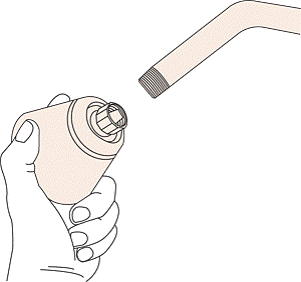
Flow restrictors are usually found in the neck or threaded end of the shower head exposed when the shower head is removed from the shower arm as shown in the image below. They would appear in the opening of the aerator when it is removed from a lavatory or kitchen faucet.
While it is possible to remove flow restrictors from shower heads, we strongly advise against it for several reasons. Flow restrictors for faucets are an integral part of most aerators, and it is generally not possible or desirable to remove them.
For water conservation purposes, most plumbing codes require faucets and showering devices to not exceed a certain maximum flow rate. Removing the flow restrictors could cause these devices to no longer meet these codes.
If you are noticing decreased water pressure or a poor-quality flow rate, you may have debris in your flow restrictor or the screen filter in your shower head or aerator. Often this is easily remedied with a simple cleaning process.
To clean the shower head, first remove it from the shower arm by turning it counterclockwise. Aerators are removed in the same way, turning counterclockwise.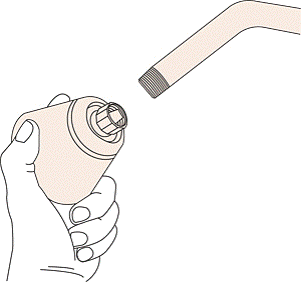
Examine the threaded portion of the shower head or aerator and flush or rub away any debris you find clogging the flow restrictor or filter screen. You may want to soak it in vinegar overnight to remove any lime deposits. Once you do this, flush it well with water, rubbing it with a toothbrush if the deposits are stubborn.
Re-install the shower head or aerator by turning clockwise.
I just moved into a newly constructed home. Why would my water pressure be low?
During the first few days you use your faucets, a small amount of debris may be flushed out of your pipe system. This happens even though the plumber flushes the pipes before completing work on your home. In addition, particles of solder, copper chips, plumber's tape, and other installation materials can get caught in aerators and showerheads. Occasionally, a chip might damage the valve seat that provides the watertight seal. The tips below will help you avoid problems. These procedures are a good idea to follow each time the water has been turned off for repairs in your home.
TO FLUSH A KITCHEN OR LAVATORY FAUCET:
- Remove the aerator, and sealing gasket if present.
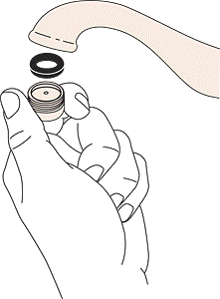
- Turn faucet handle(s) to full on hot and cold mixed position(s) and flush lines for two minutes before turning off water with handle(s).
- Replace aerator.
TO FLUSH A TUB / SHOWER FAUCET:
- Remove shower head if applicable.
- Turn handle(s) to full on hot and cold mixed position(s).
- Flush spout two minutes without moving handle(s).
- If you have a showerhead, divert water to it and flush for two minutes. BE SAFE! Make sure cold water flows FIRST and that the rotational handle limit stop is properly set.
- Replace shower head.
Some debris and/or foreign material in the lines may be too large to pass through the faucet whether it is a kitchen, lavatory or tub/shower faucet. To remove this type of debris:
- Turn off water supply to both hot and cold.
- Remove all internal components.
- Turn water supplies back on and let run for 30-60 seconds. (For kitchen and lavatory faucets turn a bucket or similar large container upside down over faucet to deflect the water into the sink.).
- Turn water supplies off again.
- Reassemble faucet.
- Turn water supplies back on.
If it has been several years since you last had a new faucet, keep in mind flow rates have been reduced to meet regulatory standards 30-45%.
Why does my faucet have low water pressure?
The debris screens and flow restrictors required for aerators and shower heads can clog, resulting in greatly reduced flow rates. Remove the aerator of the sink faucet or shower head and make sure the flow restrictor is not clogged. Additionally, flushing the system properly will help to reduce the possibility and frequency of occurrences. The tips below will help you avoid problems. These procedures are a good idea to follow each time the water has been turned off for repairs in your home and periodically as maintenance.
TO FLUSH A KITCHEN OR LAVATORY FAUCET:
- Remove the aerator, and sealing gasket if present
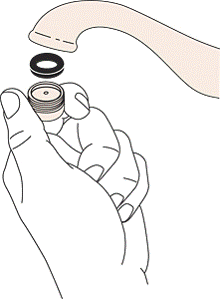
- Turn faucet handle(s) to full on hot and cold mixed position(s) and flush lines for two minutes before turning off water with handle(s).
- Replace aerator.
TO FLUSH A TUB / SHOWER FAUCET:
- Remove shower head if applicable.
- Turn handle(s) to full on hot and cold mixed position(s).
- Flush spout two minutes without moving handle(s).
- If you have a showerhead, divert water to it and flush for two minutes. BE SAFE! Make sure cold water flows FIRST and that the rotational handle limit stop is properly set.
- Replace shower head.
Some debris and/or foreign material in the lines may be too large to pass through the faucet whether it is a kitchen, lavatory or tub/shower faucet. To remove this type of debris:
- Turn off water supply to both hot and cold.
- Remove all internal components.
- Turn water supplies back on and let run for 30-60 seconds. (For kitchen and lavatory faucets turn a bucket or similar large container upside down over faucet to deflect the water into the sink.).
- Turn water supplies off again.
- Reassemble faucet.
- Turn water supplies back on.
If it has been several years since you last had a new faucet, keep in mind flow rates have been reduced to meet regulatory standards 30-45%.
Why does my new faucet have reduced flow? My old faucet had plenty of volume.
Please keep in mind that all new faucets since 1994 are restricted to conserve water per EPA code mandates. Older faucets had no restrictions. Beyond intentional flow restriction, new installations can sometimes have reduced flow if the lines are not flushed prior to installation of aerators or shower heads. The flow restrictors required for aerators and shower heads can clog, resulting in greatly reduced flow rates. Remove the aerator or shower head and make sure the flow restrictor is not clogged.
TO FLUSH A KITCHEN OR LAVATORY FAUCET:
- Remove the aerator, and sealing gasket if present
- Turn faucet handle(s) to full on hot and cold mixed position(s) and flush lines for two minutes before turning off water with handle(s).
- Replace aerator.
TO FLUSH A TUB / SHOWER FAUCET:
- Remove shower head if applicable.
- Turn handle(s) to full on hot and cold mixed position(s).
- Flush spout two minutes without moving handle(s).
- If you have a showerhead, divert water to it and flush for two minutes. BE SAFE! Make sure cold water flows FIRST and that the rotational handle limit stop is properly set.
- Replace shower head.
Some debris and/or foreign material in the lines may be too large to pass through the faucet whether it is a kitchen, lavatory or tub/shower faucet. To remove this type of debris:
- Turn off water supply to both hot and cold.
- Remove all internal components.
- Turn water supplies back on and let run for 30-60 seconds. (For kitchen and lavatory faucets turn a bucket or similar large container upside down over faucet to deflect the water into the sink.).
- Turn water supplies off again.
- Reassemble faucet.
- Turn water supplies back on.
If it has been several years since you last had a new faucet, keep in mind flow rates have been reduced to meet regulatory standards 30-45%.
Water Temperature
How can I make sure my shower is safe?
- To avoid dangerously hot temperatures, make sure your water heater is set at 120º F or below.
- Install a pressure balance tub and shower valve.Set the valve’s adjustable rotational limit stop to prevent the temperature
- handle from being turned to dangerously hot levels.
- Test the tub/shower water with your hand before bathing.
How do I set the adjustable rotational limit stop?
Follow these steps:
- Let the water run until both hot and cold water is fully mixed.
- Rotate the handle fully counterclockwise, to the hottest position.
- Place a thermometer in a plastic tumbler and hold the tumbler in the water stream.
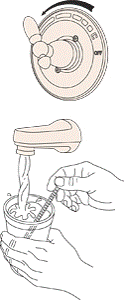
- If the water temperature is above what your local plumbing code allows (110° F or 120° F), remove the handle (to remove the handle, depending on the handle design, you may need a 1/8" or 3/32" hex key, or a Phillips screwdriver) or take off the temperature knob and rotate the rotational limit stop as follows:
- Turn the limit stop counterclockwise. For every tooth the rotational limit stop is rotated counterclockwise, the maximum water temperature will decrease approximately 6° F. NOTE: If your water temperature is too cool, rotate the limit stop clockwise.
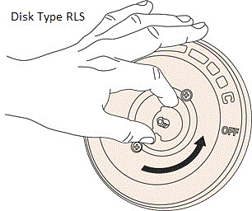
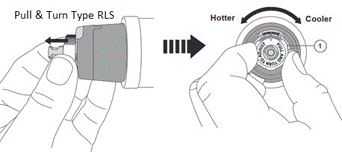
- Turn the limit stop counterclockwise. For every tooth the rotational limit stop is rotated counterclockwise, the maximum water temperature will decrease approximately 6° F. NOTE: If your water temperature is too cool, rotate the limit stop clockwise.
- Replace the handle. After verifying the water outlet temperature, secure the handle with the screw. Do not over tighten.
- MAKE SURE COLD WATER FLOWS FROM THE VALVE FIRST. ALSO MAKE SURE THAT YOUR WATER (AT THE HOTTEST FLOW) DOES NOT EXCEED THE TEMPERATURE ALLOWED (see steps 1-4 above).
Note: Consumer safety is our number one concern. If you do not have experience with plumbing repairs, we recommend that you contact a licensed plumber for tub/shower repairs.
If the hot water comes on first in a pressure balance valve when you rotate the handle counterclockwise, what’s wrong?
The water lines may have been connected in reverse. Cold water should always come on first when you’re operating a pressure balance valve and then rotating the handle counterclockwise should increase temperature. If that’s not the way things are happening, you may be able to correct the problem by "flipping" the pressure balancing cartridge.
Here are the steps to follow in reversing the operation of your faucet:
- Before you begin, make sure that you shut off the water supply to the faucet.
- Remove the handle. A clear knob will have a Phillips head screw located just under the plastic cap; a lever handle usually has a small set screw located on the side.
- Slide off the finished metal sleeve that covers the valve.
- Unscrew the bonnet nut. The bonnet nut is a large brass ring and should unscrew by hand. If it is too tight, use a strap wrench, or wrap a towel around the bonnet and use a pair of channel locks. Make sure that the entire valve body does not start to rotate as you do this. Remove the bonnet nut.
- Do not pry the valve cartridge out of the body with a screwdriver. Place the handle on the cartridge stem and rotate it counterclockwise approximately 1/4 turn after the stop has been contacted. Remove the handle. Grasp the brass stem in the center of the white plastic assembly and pull it directly out, away from the wall. The valve cartridge should slide out of the brass valve body.
- Reinstall the cartridge after rotating the entire unit 180 degrees. Make sure that the raised plastic stop, marked "HOT", is on the right side of the valve.
- Reattach the bonnet nut, trim sleeve, and handle.
The water in the shower is either hot or cold; I cannot get any temperature in-between. What’s wrong?
The spool and sleeve, the part of the pressure balance valve that blends the hot and cold water, may not be working properly. This can be caused by mineral deposits that build up over time, resulting from hard water. To solve, follow the steps below.
Tools you may need before starting: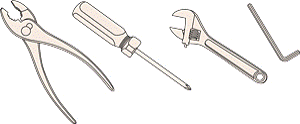
- Shut off the water supply.
- Remove the handle.
- Twist and pull sleeve to remove it.
- Unscrew brass bonnet nut.
- Remove the cartridge.
- Tap the cartridge side in your palm. The spool inside should rattle when you shake the cartridge.
- Soak cartridge in a 50/50 vinegar and water solution for 8-12 hours to remove mineral deposits that may be clogging the cartridge.
NOTE: Unless both the hot and cold water supplies are turned on, the pressure balance valve will allow only a dribble of water to flow through the valve.
Does my shower valve protect me from sudden hot or cold-water changes?
Yes. The Peerless shower valves feature a stainless-steel pressure balancing spool, which is a safety part inside that keeps the water temperature steady, reducing the risk of a scalding or chilly blast from the shower. This safety feature protects the user by equalizing the water pressure inside of the shower valve itself if there is a decrease in pressure from the hot or cold-water supply. If a pressure change were to occur the faucet will automatically readjust the water pressure from the opposite side so that it is equal with the supply that dropped in pressure. Meaning that if someone is in the shower and the toilet is flushed, the valve will reduce the hot water pressure coming into the faucet to match the cold. This ensures a constant temperature within + or - 3 degrees Fahrenheit.
If you always have large differences between hot and cold-water pressures, the faucet will only allow water through at the lower pressure. If you have a hot water supply of 25 PSI (pounds per square inch) and the cold-water supply of 60 PSI, the faucet will always operate at 25 PSI.
What is the adjustable rotational limit stop? When or why would it need to be readjusted?
The adjustable rotational limit stop found on Peerless® valves allows you to set a maximum hot water temperature for water flowing out of the tub/shower. When set correctly, this safety feature will ensure that the handle in your tub/shower faucet never rotates beyond the set level—resulting in a safe bathing temperature.
It may need to be readjusted if the inlet water temperatures change. For example, during the winter, the cold-water temperature is colder than it is during the summer, which could result in varying outlet temperatures. Typical temperatures for a comfortable bath or shower range from 90° F to 110° F.
See information on adjusting the rotational limit stop.